When you buy a property in Japan, you’re paying for two things: the building and the land beneath it. And the thing is, those two can have very different investment prospects in this country.
Land ownership in Japan even falls into two categories: freehold (所有権, shoyūken) and leasehold (借地権, shakuchiken). With freehold, you own the land outright. With leasehold, you own the building but lease the land from its owner, usually under a long-term agreement. Leasehold properties can have lower purchase prices, but you’ll need to account for ground rent and restrictions on how you use or transfer the property.
Now, Japanese houses generally lose value as they age. Buyers often favor newer buildings, and an older house may have little building value left on paper. On the other hand, the land’s value depends on location, local demand, access and what you can legally build there.
As you might have realized by now, this matters a lot when looking at akiya. An old house might need work, but its plot could sit in a popular residential area with good transport links.
How Land Values Work in Japan
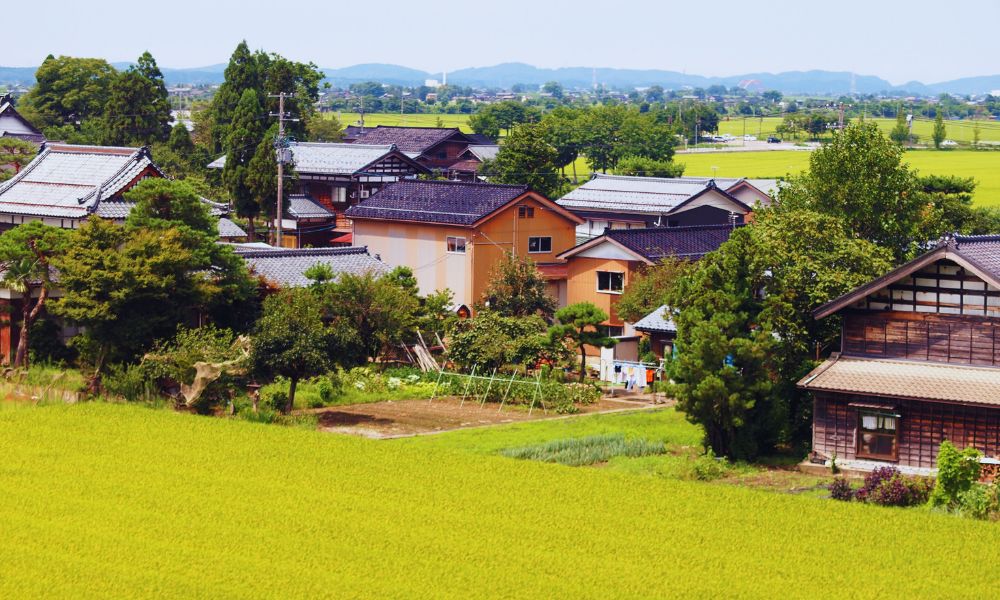
Japan’s property market has a reputation for falling prices, partly because of the collapse of the asset bubble in the early 1990s. But land prices don’t move in the same direction across the country.
The 2026 official land price survey recorded a fifth consecutive year of national growth. Residential land prices rose by 2.1% year-on-year, while commercial land prices increased by 4.3%.
Japan actually has several official land valuation systems. The main ones are:
- Kōji chika (公示地価): MLIT’s official land price benchmark, based on standard plots assessed as of 1 January and published in March.
- Kijun chika (基準地価): A prefectural land price survey, based on values as of 1 July and generally published in September.
- Rosenka (路線価): The National Tax Agency’s road value, used to calculate inheritance and gift tax. It generally sits around 80% of the official land price benchmark.
- Kotei shisanzei hyōkagaku (固定資産税評価額): The fixed asset tax valuation used by municipalities, generally around 70% of the official land price benchmark.
Of course, you have to understand that these are not asking prices or guaranteed sale prices. For a more realistic picture, compare them with actual transactions in the area. The government’s Real Estate Information Library lets you check transaction prices, official land values, urban planning information and disaster risks.
How to Assess Land Before Buying in Japan
Start by comparing recent sales of nearby land with a similar size, shape, road access and permitted use.
Japanese listings sometimes feature hatakakechi (旗竿地), or flagpole-shaped land. These plots have a narrow strip connecting the main section to the road. They can cost less, but the access strip may make construction and vehicle access awkward.
Road access is also a legal issue. Under Article 43 of the Building Standards Act, a building site generally needs at least two metres of frontage onto a qualifying road. A property that fails these requirements may fall into the saikenchiku fuka (再建築不可) category, meaning it cannot be rebuilt under the applicable rules. The existing house might still be usable, but demolishing it could leave you with land on which you cannot build a replacement.
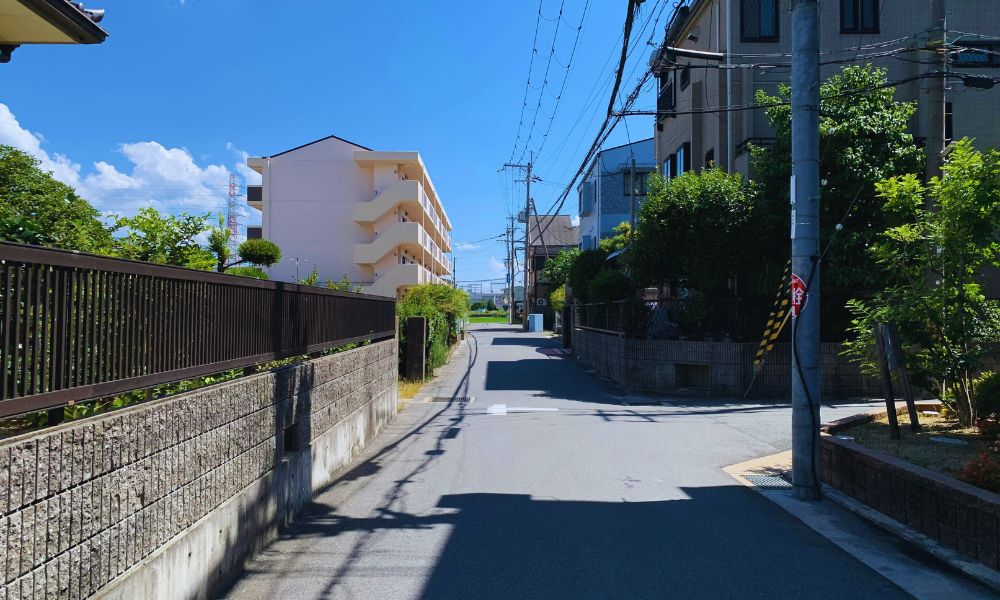
Before buying, you should also check the site’s yōto chiiki (用途地域), or land-use zone. Two figures are particularly important. Kenpeiritsu (建ぺい率) is the building coverage ratio, which limits how much of the plot a building can cover at ground level. Yōsekiritsu (容積率) is the floor-area ratio, which limits the total floor space.
For example, a 100-square-metre plot with a 60% building coverage ratio generally allows a footprint of up to 60 square metres. If its floor-area ratio is 200%, the permitted total floor space could reach 200 square metres, subject to other restrictions.
Additionally, check whether the land sits in a shigaika kuiki (市街化区域), where development is generally encouraged, or a shigaika chōsei kuiki (市街化調整区域), where development is restricted. Agricultural land and forest land need extra checks. The registered land classification, or chiboku (地目), can affect the permissions needed to change its use. Buying agricultural land with plans to build a house, for example, requires careful investigation before you commit.
Red Zones, Flood Risks and Other Land Restrictions
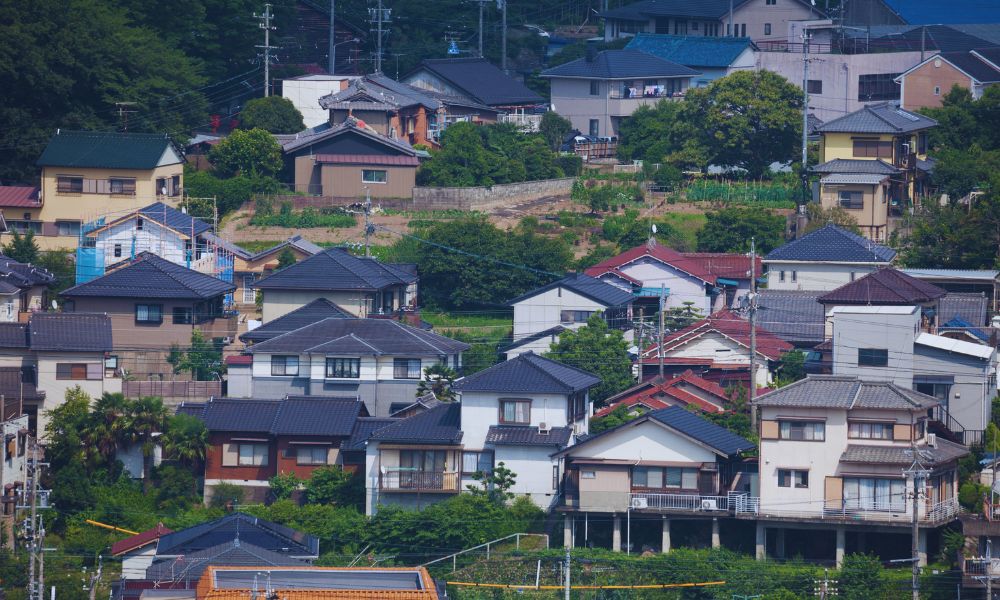
Japan’s hazard designations can have a direct effect on what you can build and what the land might be worth.
For hillside properties, check the landslide hazard zones. Dosha saigai keikai kuiki (土砂災害警戒区域), commonly called yellow zones, identify areas where sediment-related disasters could threaten people. Dosha saigai tokubetsu keikai kuiki (土砂災害特別警戒区域), or red zones, cover areas where a disaster could cause particularly severe damage to buildings and occupants.
Red-zone status brings stricter development and construction requirements. It doesn’t automatically prevent ownership or mean every existing building must be demolished. However, it can make rebuilding more complicated and expensive.
If the property is near a river or in a low-lying area, check its exposure to flooding. The government’s Hazard Map Portal lets you search by location and view these hazards, as well as access local municipal hazard maps for more detailed information.
If the land is reclaimed or sits on soft ground, check its liquefaction risk too. Liquefaction during an earthquake can damage foundations, roads and underground infrastructure. The MLIT provides guidance on investigating liquefaction risk, including links to relevant maps and ground information.
The Hidden Costs of Buying Land in Japan
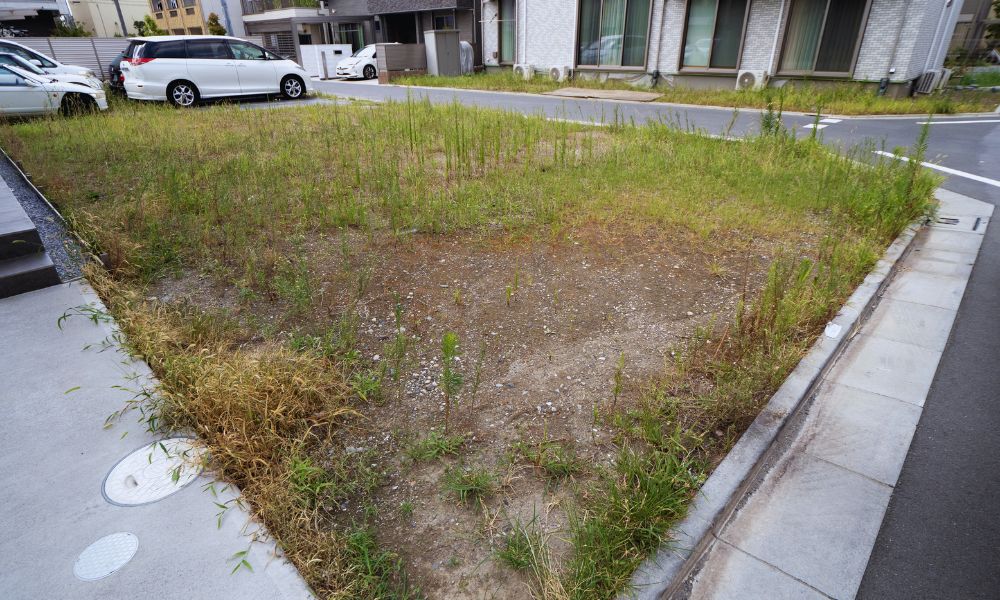
If the land you are interested in purchasing comes with an old building, demolition may be necessary. Costs depend on the building’s size, materials and access. Asbestos-containing materials can also add considerably to the bill because specialist handling and disposal rules apply.
There’s also a potential increase in property tax to consider. Residential land in Japan benefits from a reduction in fixed asset tax (住宅用地の特例, jūtaku yōchi no tokurei). If you demolish an old house and leave the land vacant, this reduction may no longer apply, resulting in a higher annual tax bill. This is another cost to factor in before deciding to demolish an existing property.
Even if there is no building to be demolished, the site itself may need work. Overgrown vegetation, uneven ground, poor drainage and unstable slopes all cost money to address. Japan has a lot of hilly suburban areas, making retaining walls deserving of particular attention: visible cracks or signs of deterioration can point to expensive repairs.
Of course, check the boundaries too. Older properties sometimes have unclear boundary records or disagreements with neighbouring owners. For this, a surveyor may need to review documents, inspect the site and coordinate with neighbours.
Is Buying Land in Japan a Good Investment?
It can be, but a low purchase price alone doesn’t make land a good investment. In areas with declining populations and few local jobs, prices can keep falling and resale can take years.
Start by asking who might want the property in five or ten years. Could a local family buy it? Is there a rental market? Are commuters, businesses or holiday-home buyers likely to be interested? If you can’t identify a realistic source of demand, think carefully before committing.
You also need to decide between vacant land and an existing akiya.
Vacant land gives you more control over a new building, but you’ll need to budget for site preparation, construction and the time it takes to complete the project. An existing akiya may offer a cheaper route into the market, particularly if the structure is sound and you can renovate it for rental use. That said, that building can have structural problems, and major repairs can wipe out the apparent savings.
Buying Land in Japan FAQs
Does land appreciate in value in Japan?
Yes, land prices have risen in many Japanese cities and high-demand areas. The 2026 official survey recorded a 2.1% national increase for residential land. Some rural areas, however, continue to face falling prices and weak buyer demand.
How do I find out how much land is worth in Japan?
Start with the government’s Real Estate Information Library. Compare recent transactions for similar plots nearby, then check official land valuations, road access, zoning and the physical condition of the site.
What is a red zone when buying land in Japan?
A red zone, or dosha saigai tokubetsu keikai kuiki, is an area at risk of particularly severe damage from landslides or other sediment-related disasters.
Is vacant land a better investment than an old house?
Not automatically. Vacant land offers more control over construction, but site preparation and building costs can be substantial. An existing akiya may offer a cheaper way to generate rental income if the structure is sound and renovation costs make sense.
Buying Land and Property in Japan with Sumica
Finding a suitable property takes more than browsing public listings. You need someone on the ground who can check the site, assess its restrictions and work out what it might cost to make it usable.
Sumica works with international buyers on property sourcing, renovation, leasing and management. Our team sources off-market akiya through a private network and screens properties for factors such as location, budget, rebuildability, renovation costs and expected yield.
Once you’ve found a suitable property, we can coordinate renovation work with local craftspeople. We even offer property management, including tenant placement, contracts, rent collection, maintenance and repairs. Overseas owners can receive progress updates and monthly reports without having to manage every detail from Japan.
If you’re considering buying land or investing in Japanese property, speak with us about finding an opportunity that fits your budget and investment goals. Consult with Sumica now.