Welcome to Lesson 07 of the Sumica Investor Library.
In Lesson 06, we explored why high advertised gross yields can often hide severe ongoing costs. Today, we look at the other extreme: properties with red-flag labels like non-rebuildable, pre-1981 seismic codes, or suburban locations, and when they can actually represent strong value.
Get our weekly educational reports and hand-picked investment opportunities delivered to your inbox. Join our free investor newsletter below.
When searching for affordable property in Japan, overseas buyers often come across terms such as non-rebuildable, pre-1981 seismic standards, suburban, or far from the nearest station.
These conditions require careful evaluation, but automatically rejecting every property based on one label is not always the right decision.
The important questions are how serious the risk is, whether it is reflected in the price, whether it interferes with rental operation, and whether there is a realistic exit.
Non-Rebuildable Properties
A non-rebuildable property is generally one where a new building cannot be constructed after the current building is demolished, often because current road-access requirements are not met.
This restricts land use, financing, and future exit options.
However, it may still be worth considering if the building can be used for many years, renovation can extend its life, rental demand is stable, the price is low, and rent can recover the total investment.
The issue is whether the price and investment plan compensate for the restriction.
Properties Built Under Older Seismic Standards
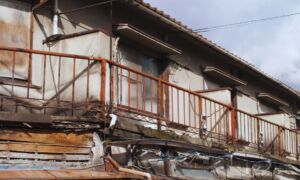
Buildings approved before June 1981 generally fall under older seismic standards and require more careful assessment.
Age alone does not fully determine condition. Older buildings may be well maintained, while newer ones may suffer from leaks, termite damage, corrosion, settlement, or deteriorated equipment.
Important checks include floor slope, foundation cracks, structural deterioration, roof and exterior condition, leaks, termites, alterations, and future repair costs.
The exit strategy should also consider whether future buyers can obtain financing.
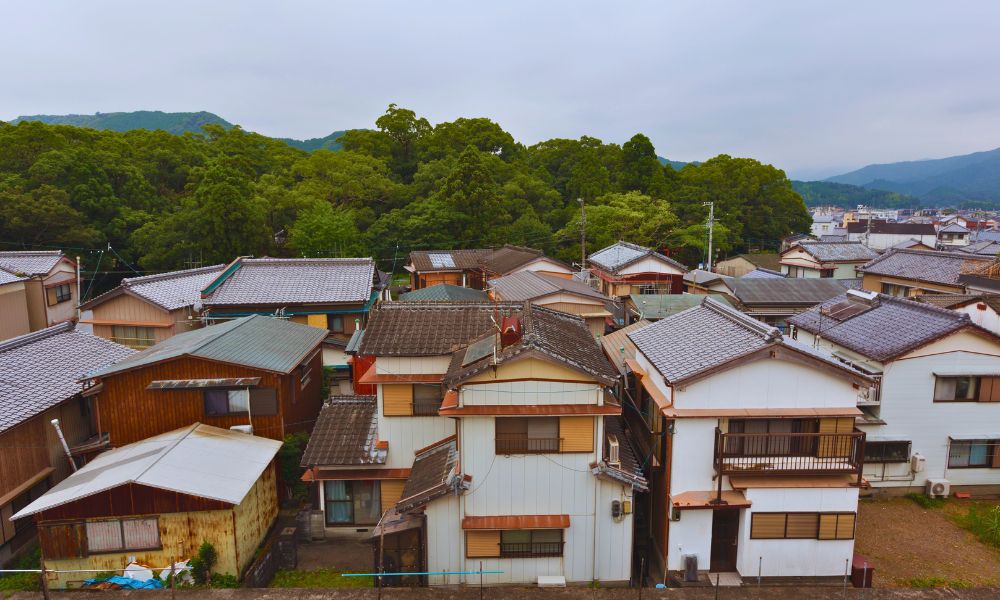
Suburban Properties

Rental demand in Japan is not determined only by station distance.
In car-oriented areas, parking, access to supermarkets, schools, hospitals, nearby employment, family-sized space, and limited detached-house supply may matter more.
A suburban property may have stable demand, while a station-area property may perform poorly if population is falling, rents are low, or competition is excessive. The key question is whether people actually want to live there.
Exit Strategy Does Not Always Mean Resale
An investor may recover capital through long-term rent, sell later with a tenant, sell to a neighboring owner or cash buyer, use the property personally, or continue operating it as a low-cost asset.
Caution is necessary when several risks overlap: weak demand, short remaining building life, non-rebuildability, little land value, and no realistic future buyer.
Do Not Invest Based on Labels Alone

It is a mistake to reject every non-rebuildable, old, or suburban property. It is equally dangerous to buy simply because a property is cheap or the yield is high.
At Sumica, we review legal restrictions, condition, renovation, rental demand, total investment, recovery period, resale potential, and alternative exits.
A good investment is not a property with no risk. It is a property where the risks are understood and compensated for by price and return.